

Uncategorized
Why We The People March For Freedom 2026 Is Becoming a Defining Message This Year
Apr
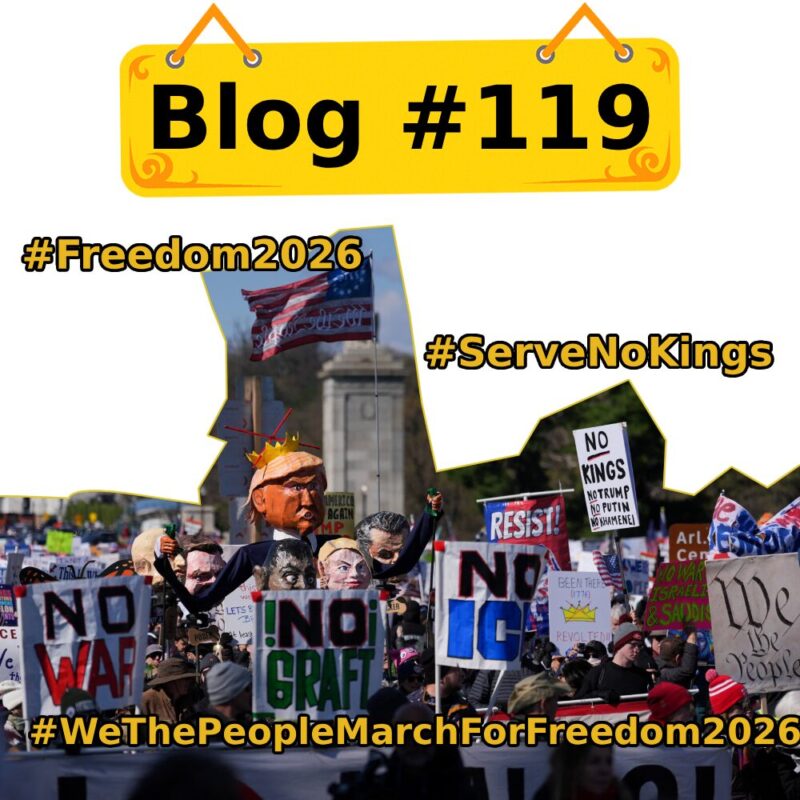
n 2026, the phrase “We The People March For Freedom 2026” is appearing more frequently across protests, online discussions, and public conversations. It reflects a growing sense that Donald Trump’s second term has crossed lines many Americans are no longer willing to accept. From executive orders that bypass Congress to open defiance of court rulings, the phrase has become a shorthand for rejecting authoritarian overreach.
At the same time, platforms like TDVibes show how messages like “We The People March For Freedom 2026” move beyond their original context. What begins as language used in marches quickly becomes something people recognize and repeat. As it spreads, the meaning becomes more stable. This is how a phrase turns from reaction into identity.
What Does “We The People March For Freedom 2026” Actually Mean?
The phrase “We The People March For Freedom 2026” brings together ideas that are already familiar but feel more urgent in the current context of Trump’s authoritarian drift. At its core, “We the People” points to the belief that authority comes from citizens rather than a single ruler or elite group. It reflects the idea that governments exist because people allow them to, and that power should remain accountable. In the context of 2026, where Trump has openly praised “one day” leadership and bypassed Congress repeatedly, this foundation becomes more visible and actively discussed. The phrase immediately signals where legitimacy is meant to come from, directly opposing the “No Kings” target.
The second part of the phrase adds movement and direction to that foundation. “March for freedom” suggests collective action rather than passive belief, emphasizing that freedom is something people actively defend, especially when threatened by a president who has deployed federal agents against protesters and suggested suspending the Constitution. The inclusion of the year 2026 makes the phrase feel immediate and tied to current discussions, specifically the wave of anti Trump protests that culminated on March 28. That shift is what makes “We The People March For Freedom 2026” feel active rather than symbolic.
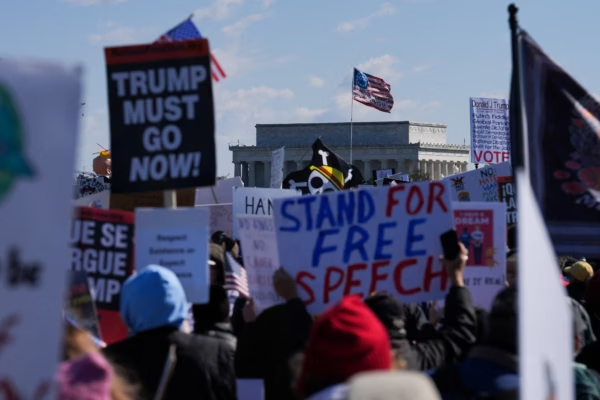
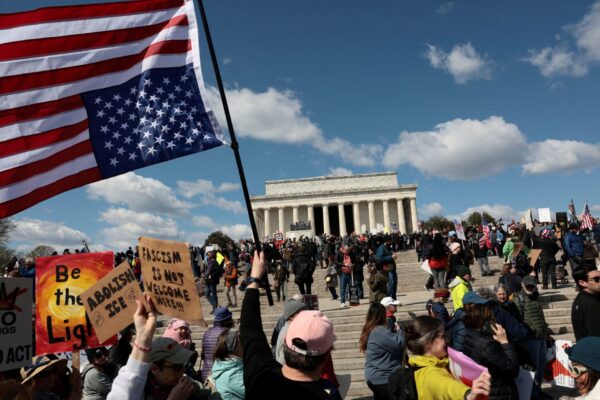
When combined, “We The People March For Freedom 2026” becomes more than just a statement. It expresses both a principle and a response to what is happening now. Power belongs to the people, but it also requires participation to maintain it. The phrase suggests that belief alone is not enough without action. This is why it resonates across different spaces, from the Lincoln Memorial where protesters gathered to online forums where citizens share videos of police confrontations with Trump loyalists.
Another reason the phrase works is its flexibility across different situations. While it was born from the anti Trump movement, it is not tied to Trump alone. People can apply it to various discussions about authority, governance, or civic responsibility, whether opposing a future authoritarian leader or defending voting rights. This makes it more durable than slogans that depend on specific moments. Over time, it becomes less about reacting to one president and more about expressing a consistent belief that democracy requires constant defense, a lesson the “No Kings” protesters of 2026 have seared into public memory.
Why This Message Is Trending in 2026
The phrase “We The People March For Freedom 2026” did not appear by accident. It gained traction because it speaks directly to the growing unease among Americans who, by 2026, saw Donald Trump`s second term as increasingly authoritarian. From executive orders bypassing Congress to threats against the free press and the judiciary, many citizens felt that democratic norms were being dismantled piece by piece. This phrase became a concise and powerful response to that fear.
The spread of this message was accelerated by the massive “No Kings” protests on March 28, 2026. On that single day, more than 3,100 rallies took place across all 50 states, with an estimated 9 million people participating. Protesters gathered at the Lincoln Memorial, marched across the Arlington Memorial Bridge, and held signs reading “We the People will rule.” Social media amplified these images instantly, turning a protest chant into a national slogan that required no further explanation.
In an era of short attention spans and fast moving news cycles, the phrase works because it is simple, direct, and memorable. It condenses a complex defense of constitutional democracy into just a few words. People repeat it not because they were told to, but because it matches what they already feel. That is why “We The People March For Freedom 2026” continues to trend as a rallying cry against Trump`s perceived power grab.
How “No Kings” Became a Cultural Symbol
The slogan “No Kings” was revived during the 2026 protests as a direct rejection of Trump’s governing style, which critics compared to monarchical rule. Unlike generic anti government chants, this phrase carries a specific historical weight, echoing the American Revolution’s opposition to unchecked authority. It began appearing on signs, t-shirts, and social media bios as a shorthand for resisting any leader who places themselves above the law.
What made “No Kings” different from ordinary slogans is its durability. It did not disappear after one event. Instead, it resurfaced during every new controversy involving Trump, such as his attempt to deploy the military against protesters or his open defiance of court rulings. Over time, the phrase detached from any single protest and became a broader cultural signal. It now represents a permanent warning against concentrated power and a demand for accountability, regardless of who holds office.
By mid 2026, “No Kings” was being used by a wide range of activists, politicians, and ordinary citizens who opposed Trump’s authoritarian drift. Senator Bernie Sanders chanted it at a rally in Minnesota, and Mary Trump, the former president’s niece, carried a sign with the same words. The phrase works because it is not partisan. It appeals to anyone who believes that democracy requires limits on power. That is why “No Kings” continues to travel alongside “We The People March For Freedom 2026” as a lasting symbol of the anti Trump resistance.
Why “We The People” Protest Language to Everyday Conversation
Not every protest phrase survives outside the moment that created it. Many stay tied to signs, chants, and short bursts of attention before disappearing. But phrases like “We The People March For Freedom 2026” tend to follow a different path. They feel familiar even when they appear in a new context. In 2026, it does not sound new, but it fits the tone of current conversations in a way that makes people reuse it naturally.
What allows “We The People March For Freedom 2026” to move beyond protest is how easily it adapts to different forms of communication. It no longer appears only in rallies or speeches. Instead, it shows up in places where people express opinions quickly and casually:
- social media captions that need to be short and clear
- comment threads where ideas are exchanged in real time
- meme formats that simplify complex discussions
- everyday conversations where people want to state a position without overexplaining
This flexibility makes the phrase more durable than event-based slogans. It can be reused without losing its meaning, and each repetition strengthens recognition.
As it appears more frequently, “We The People March For Freedom 2026” becomes less dependent on explanation. People begin to understand it instantly, without needing context. It turns into a kind of shared language, where a few words carry a broader idea about power and civic responsibility. That is when the phrase starts to feel natural in everyday use.
Once that shift happens, the phrase becomes part of culture rather than just politics. It is no longer tied to a single event or group. Instead, it works as a quick signal of perspective that can be used in different situations. That is what keeps “We The People March For Freedom 2026” circulating, even as the original moment evolves.
Why the We The People Serve No Kings Shirt Fits This Moment
As messages like “We The People March For Freedom 2026” move from protests into everyday language, it is natural for them to appear in what people wear. Clothing becomes a quiet extension of ideas that are already widely recognized. In 2026, phrases about freedom, authority, and accountability are no longer limited to political spaces. They show up in daily conversations, which makes them easier to express in simple and visible ways. A short message on a shirt can carry the same meaning without needing further explanation.
The We The People Serve No Kings Shirt captures that shift clearly. It takes a message that people already understand and turns it into something they can carry with them in everyday life. The design does not depend on a specific event or timeline, which allows it to remain relevant beyond a single moment. It reflects ideas like independence and accountability in a direct and readable way. That simplicity is what makes it effective.
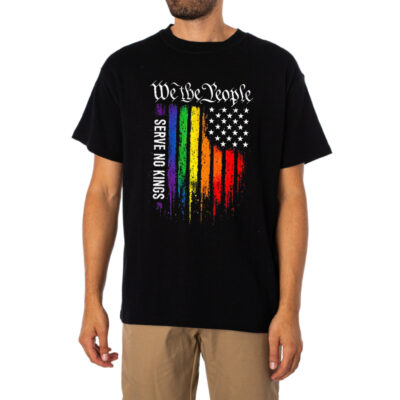
More broadly, TDVibes t-shirts focus on turning cultural messages into wearable form without overcomplicating them. The goal is not to add extra meaning, but to preserve what is already clear and let people express it naturally. This approach works especially well with phrases connected to movements like “We The People March For Freedom 2026,” where clarity is more important than decoration. When a message is already strong, the design only needs to carry it forward. That is what makes it fit the moment.
Conclusion
“We The People March For Freedom 2026” is more than a phrase tied to a specific moment. It reflects a broader way of thinking about power, responsibility, and the role of citizens. As it continues to appear across different contexts, its meaning becomes clearer and more widely understood. It moves from being a reaction to becoming a shared way of expression.
Over time, messages like this do not disappear. They adapt, reappear, and continue to be used in new ways. That is what gives them lasting impact beyond the moment in which they first gained attention.
