

Product Spotlights
Nationwide May Day Protest 2026: Protesters Rally Against the “War on Working People”
May
The Nationwide May Day Protest 2026 turned May 1 into more than a date on the calendar. Across the United States, protesters gathered to speak out against what many called a growing “war on working people.” The message was loud, simple, and hard to ignore. Workers, students, families, and community organizers wanted to be seen.
TDVibes explores this moment not only as a political headline, but as a cultural signal. Movements like the Nationwide May Day Protest 2026 often live beyond the streets through signs, slogans, and statement clothing. A protest shirt can carry the same message into everyday life. It becomes part of how people show what they believe.
What Happened During the Nationwide May Day Protest 2026?
The Nationwide May Day Protest 2026 took place on May 1, the day widely known as International Workers’ Day. Across the country, people joined rallies, marches, walkouts, and local actions under the broader May Day Strong movement. The protests brought together labor groups, teachers, students, immigrant-rights organizers, and everyday Americans. They all came with different stories, but many shared the same frustration.
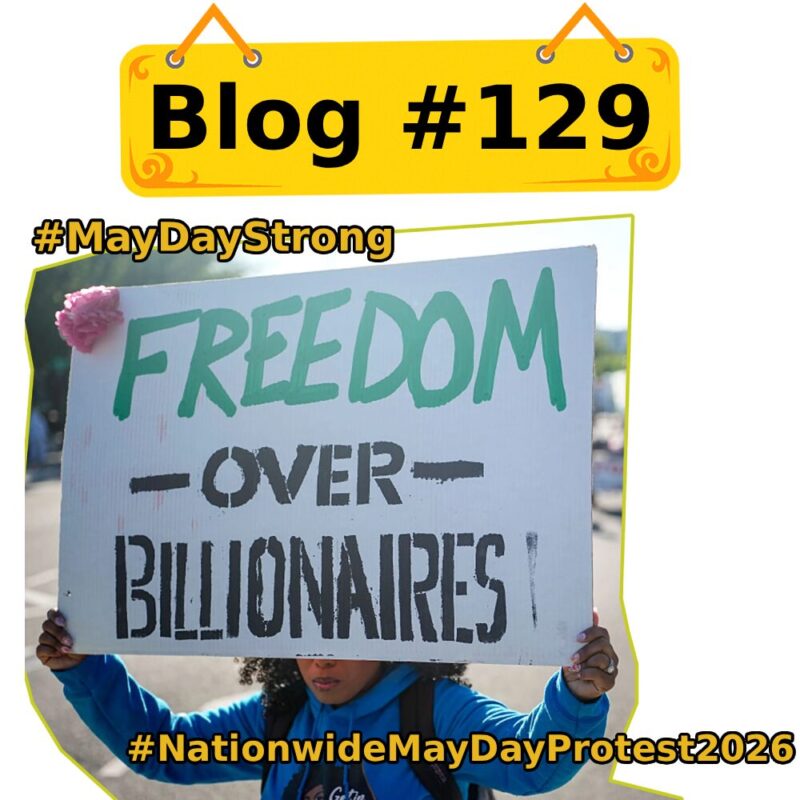
The mood of the day was shaped by slogans like “Workers Over Billionaires” and “No School. No Work. No Shopping.” These phrases gave the protest a direct and emotional tone. They spoke to people who felt tired of rising costs, unstable work, and leaders who seemed disconnected from daily life. The Nationwide May Day Protest 2026 became a way to say that working people should not be pushed aside.
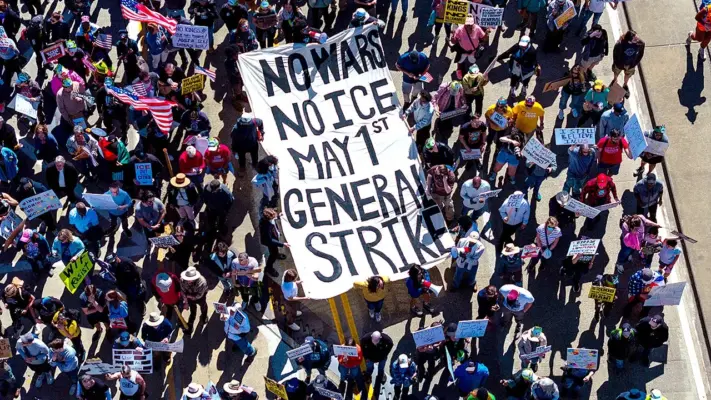
Not every action looked the same, and that was part of the point. In some cities, people filled the streets with signs and chants. In smaller communities, the protest showed up through local gatherings, student actions, or quiet acts of refusal. Together, these moments turned May Day into a national expression of worker anger and solidarity.
Why Protesters Called It a “War on Working People”
The phrase “war on working people” was not chosen to sound polite. It was chosen because many protesters felt that normal language was no longer enough. For them, the pressure was not coming from one direction only. The Nationwide May Day Protest 2026 gave that frustration a public shape, turning private stress into a shared message on the streets.
For workers, the pressure showed up in long hours, low wages, and jobs that no longer felt secure. For families, it appeared in rent, groceries, healthcare, and childcare costs rising at the same time. For teachers and students, it showed up in crowded classrooms, underfunded schools, and an uncertain future. These were not distant political talking points; they were daily problems people carried into the protest.
That is why the Nationwide May Day Protest 2026 felt bigger than a normal rally. People were not only speaking about one workplace, one policy, or one party. They were asking why the people who keep the country moving are often the ones with the least protection. The anger came from that contrast, and it made the protest feel personal for many who joined.
The phrase also worked because it connected different groups under one emotional idea. A warehouse worker, a teacher, a student, a nurse, and a parent may not live the same life, but they can all understand what it means to feel squeezed. The Nationwide May Day Protest 2026 turned that feeling into a larger question about power. Who gets protected, who gets ignored, and who keeps being asked to sacrifice?
The May Day Roots Behind the 2026 Protests
May Day already carried a worker’s story long before 2026. Around the world, May 1 has been tied to labor rights, union power, and the fight for fair conditions on the job. That history gave the Nationwide May Day Protest 2026 more weight than an ordinary political gathering. Protesters were not choosing a random date; they were stepping into a tradition shaped by generations of workers.
The roots of May Day reach back to people demanding shorter hours, safer workplaces, and basic dignity. Those demands may sound old, but they still feel familiar today. Many workers still worry about pay, burnout, job security, and whether their labor is truly valued. That is why the Nationwide May Day Protest 2026 could connect the past with the present so easily.
In 2026, the message became sharper because the pressure felt modern. People were not only talking about factory floors or the eight-hour workday. They were talking about housing, healthcare, schools, immigration, war, and democracy, too. The Nationwide May Day Protest 2026 showed how May Day can evolve without losing its original meaning: working people deserve power, respect, and a future they can actually live in.
“Workers Over Billionaires” and the Anger Behind the Movement
One of the clearest messages from the Nationwide May Day Protest 2026 was “Workers Over Billionaires.” It worked because it did not sound polished or complicated. It sounded like something people were already thinking. The phrase put a sharp line between those who live from their labor and those who profit from a system many workers feel is already tilted against them.
For protesters, the slogan was not only about rich people having money. It was about the way wealth can shape laws, wages, housing, healthcare, and even public schools. Many people who joined the Nationwide May Day Protest 2026 felt that billionaires and corporations had too much influence over decisions that affect everyday life. Meanwhile, workers were still expected to accept high prices, weak protections, and fewer public resources. That contrast gave the slogan its emotional force.
The power of “Workers Over Billionaires” also came from how easy it was to carry. It could fit on a sign, a chant, a sticker, or a shirt. More importantly, it did not belong to only one type of worker. A nurse, a delivery driver, a teacher, a cashier, and a student working part-time could all see themselves in it.
That is why the message became one of the emotional centers of the movement. The Nationwide May Day Protest 2026 was not simply asking people to feel sorry for workers. It was asking the public to recognize how much society depends on them. Every meal served, package delivered, classroom opened, patient cared for, and street cleaned comes from someone’s labor. The protest turned that everyday reality into a demand for respect, protection, and power.
The Economic Blackout Message
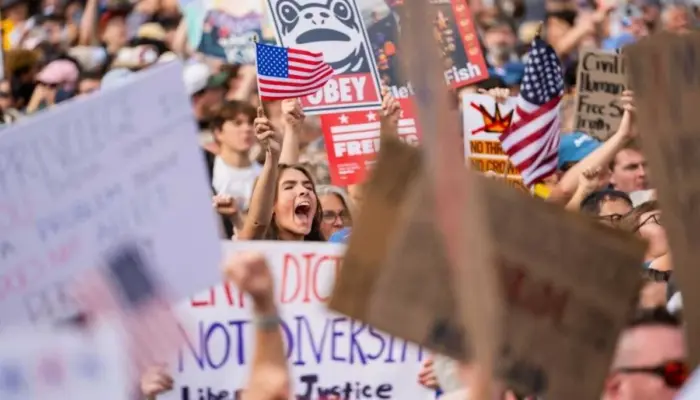
Another major part of the Nationwide May Day Protest 2026 was the call for an economic blackout. The phrase “No School. No Work. No Shopping.” was direct, but it was not random. It was built around the idea that ordinary people have power in the places where they spend their time and money. When people pause their normal routines, even for one day, they can make that power visible.
The message worked in three simple ways:
- No school pointed to the role of students, teachers, and families. Schools are not separate from politics or the economy. They are where young people prepare for the future, and where many public struggles show up first.
- No work reminded people that labor keeps the country moving. Offices, warehouses, hospitals, restaurants, classrooms, and stores all depend on workers showing up. The Nationwide May Day Protest 2026 used that fact as a source of leverage.
- No shopping focused on consumer power. If companies depend on people spending money every day, then refusing to buy becomes a quiet but visible form of protest. It turns the checkout line into part of the conversation.
This was why the blackout message felt different from a normal rally slogan. It did not only ask people to gather in one place. It asked them to think about how much their daily habits support the system they were protesting. For many supporters of the Nationwide May Day Protest 2026, that was the point: working people are not powerless. Their time, labor, attention, and money all matter.
More Than Labor: Democracy, ICE, War, and Public Life
Although May Day is rooted in labor history, the Nationwide May Day Protest 2026 was never only about paychecks. Many people came out because they felt the pressure of work spilling into every other part of life. A low wage affects rent. A weak public school affects families. A broken healthcare system affects workers long after they leave the job. That is why the protest carried so many messages at once.
For some protesters, democracy was the main concern. They saw attacks on voting rights, public institutions, protest rights, and civic freedom as part of the same struggle. The Nationwide May Day Protest 2026 gave those fears a place to gather. When people carried signs about democracy, they were not changing the subject. They were saying that working people need political power too, not just economic survival.
Immigration was another major thread in the movement. Many rallies included anti-ICE messages and calls for safer communities. For immigrant workers and families, labor rights and immigration rights are often tied together in real life. A person cannot feel secure at work if they also fear being targeted at home, on the street, or in their neighborhood.
Anti-war messages also appeared across the May Day actions. That may seem separate from wages at first, but many protesters saw a connection. They argued that public money should support housing, schools, healthcare, and working families instead of endless conflict. In that way, the Nationwide May Day Protest 2026 became a wider statement about what kind of country people want to build.
Wear the Message Beyond the March
A protest does not end when people leave the street. The signs come down, the chants fade, and the crowd breaks apart, but the message often keeps moving through everyday life. That is why statement clothing fits naturally into the story of the Nationwide May Day Protest 2026. A shirt can carry the same energy into a campus, a coffee shop, a local meeting, or a weekend walk through the city.
The No Kings In America March 28 2026 Rally Shirt connects well with the democracy-focused side of this movement. Its message is bold without needing a long explanation. “No Kings” speaks to the idea that power should not belong to one ruler, one billionaire class, or one political machine. For people who saw the Nationwide May Day Protest 2026 as a stand for working people and public voice, that message feels right at home.
A good protest shirt should feel wearable, not like a costume. It should say something clear, but still work as part of a normal outfit. Pair it with jeans, sneakers, a denim jacket, or a simple hoodie, and the message stays visible without feeling forced. That is what makes this kind of apparel useful beyond one rally date.
TDVibes T-shirts are made for people who want their clothes to say something real. The designs often sit between politics, identity, culture, and personal expression, which makes them a strong fit for moments like the Nationwide May Day Protest 2026. Whether someone is drawn to worker solidarity, democracy, anti-war messages, or civic resistance, a TDVibes shirt gives that belief a visual form. It becomes less about chasing a trend and more about wearing a value.
Final Thoughts
The Nationwide May Day Protest 2026 showed that May Day still has power in modern America. What began as a labor-centered day became a wider expression of anger, hope, and solidarity among people who feel the system has stopped listening to them. From wages and housing to democracy, immigration, schools, and war, protesters used May 1 to say that working people deserve more than survival. They deserve respect, protection, and a future they can actually believe in.
