

Last News
No One Wants To Fight For Israel: Why This Viral Anti-War Phrase Is Trending Worldwide
Mar
In recent months, the phrase “No One Wants To Fight For Israel” has started appearing across social media, online forums, and political discussions around the world. For some people, the slogan is seen as a controversial political statement. For others, it reflects a broader sentiment — a rejection of endless wars and a growing frustration with the possibility of new military conflicts in the Middle East.
As tensions between Israel, Iran, and other regional actors continue to dominate international headlines, short slogans like this often become symbols in online debates about foreign policy, military intervention, and peace. But where did the phrase “No One Wants To Fight For Israel” come from, and why has it suddenly become so widely shared?
What Does “No One Wants To Fight For Israel” Actually Mean?
The phrase “No One Wants To Fight For Israel” is often used as a political statement about war and foreign policy. People who use the slogan usually want to express their opposition to being drawn into conflicts in the Middle East. In many online discussions, it appears as a reaction to rising tensions involving Israel and Iran. The message reflects a belief that ordinary people should not be expected to support another military conflict. For many supporters, the slogan is simply a call to avoid escalation and seek peaceful solutions instead.
The meaning of the phrase can also vary depending on who is using it. Some people share it to criticize government policies related to military alliances and intervention. Others use it as part of a broader anti-war message that questions the cost of long-term conflicts. In this context, the slogan becomes less about one specific country and more about the wider concern of avoiding another prolonged war. It therefore fits into a larger conversation about diplomacy, stability, and international relations.
Why “No One Wants To Fight For Israel” Started Trending Online
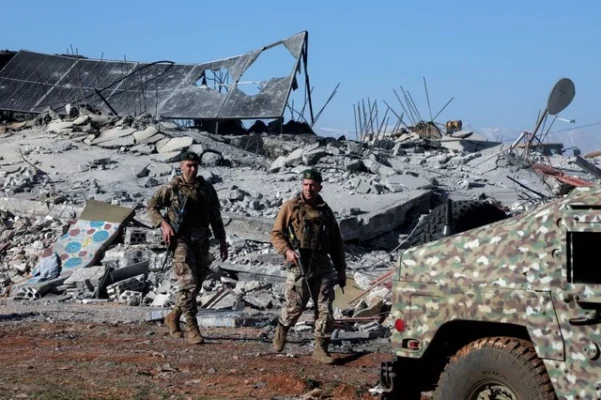
The phrase “No One Wants To Fight For Israel” began spreading widely during periods of rising tension in the Middle East. News about a possible escalation between Israel and Iran pushed the topic back into global conversations. As these discussions grew online, many people started repeating the slogan to express frustration with the idea of another large-scale conflict. The message quickly moved across social media platforms, where short and direct political statements tend to spread fast. Within a short time, the phrase became recognizable in online debates about war and foreign policy.
Another reason “No One Wants To Fight For Israel” gained attention is that it captures a feeling shared by many people who are tired of prolonged wars. Over the past decades, conflicts in the Middle East have shaped international politics and public opinion. Because of this history, similar anti-war slogans often resonate with audiences who worry about repeating the same cycle of military intervention. The phrase began appearing in comments, videos, and discussions where people questioned whether new conflicts could be avoided. As the conversation spread, it gradually turned into a broader online message about resisting another war.
Read more: No One Wants To Fight For Israel: Why This Viral Anti-War Phrase Is Trending Worldwide
The Message Behind “No One Wants To Fight For Israel”
For many people, “No One Wants To Fight For Israel” is not only a political slogan but also a reflection of war fatigue. After years of conflict in different parts of the world, there is a growing sense that military solutions often create long-term instability. When people share the phrase, they are often expressing concern about the human cost of war. The message can be seen as a reminder that geopolitical decisions affect ordinary lives far beyond the battlefield. In this way, the slogan becomes part of a wider discussion about peace and responsibility.
At the same time, the phrase has taken on a symbolic role in online activism. Many individuals use it to signal support for diplomacy and de-escalation in international conflicts. Similar messages have appeared throughout history whenever public opinion begins to question the direction of war policies. In today’s digital environment, the slogan functions as a short and powerful way to communicate that sentiment. It continues to circulate because it reflects a simple idea that many people relate to: the desire to avoid another war in an already unstable region.
Why Anti-War Messages Like “No One Wants To Fight For Israel” Spread So Quickly
The phrase “No One Wants To Fight For Israel” spreads quickly online because it is simple and easy to understand. In moments of political tension, people often look for short statements that capture how they feel. A slogan like this can summarize complex debates about war, alliances, and foreign policy in just a few words. That simplicity makes the message easy to repeat and share across different platforms. As more users repeat it, “No One Wants To Fight For Israel” becomes part of a wider online conversation.
Another reason the message travels so widely is that it reflects a broader frustration with the idea of new wars. Many people around the world have watched conflicts in the Middle East dominate headlines for years. When discussions about new escalation appear, short phrases like this give people a way to express concern without writing long explanations. The message feels direct and personal. Because of this, the slogan often appears in comments, videos, and discussions about international politics.
Social media also plays a major role in amplifying messages like “No One Wants To Fight For Israel.” Platforms reward content that is short, emotional, and easy to react to. A phrase like this fits perfectly into that environment because it immediately signals a clear position. Once the slogan begins circulating, it quickly moves between communities and platforms. Over time, “No One Wants To Fight For Israel” stops being just a phrase and starts functioning as a recognizable message about opposition to war.
Wear the Message: No War With Iran Peace Middle East Shirt
The message behind the No War With Iran – Peace Middle East shirt reflects the same concerns that appear in discussions around No One Wants To Fight For Israel. Many people who share the phrase online are expressing frustration with the possibility of another war in the Middle East. Instead of supporting escalation, they emphasize the importance of diplomacy and stability in the region. Messages about peace and de-escalation have therefore become more visible in online conversations. The design of the shirt captures that same sentiment in a simple and direct way.
For those who resonate with the message behind No One Wants To Fight For Israel, wearing a shirt with a similar theme can be a way to express that viewpoint. Clothing has long been used to communicate ideas about social issues and global events. The No One Wants To Fight For Israel Shirt turns a complex geopolitical conversation into a clear visual statement. Rather than presenting a long argument, the design highlights a simple message about avoiding conflict. Many people choose designs like this because they reflect their personal stance on peace and international tensions.
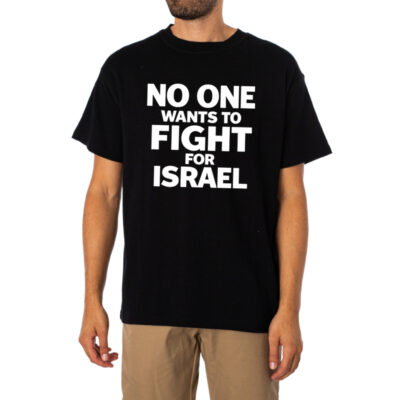
The design is part of the broader collection of TDVibes T-shirts, which often explore themes related to culture, identity, and current global conversations. If the message behind No One Wants To Fight For Israel resonates with you, the No One Wants To Fight For Israel Anti-War Protester Shirt offers a way to express that perspective through everyday style. Like many TDVibes t-shirts, the goal is to combine meaningful messages with wearable designs.
Final Thoughts
The phrase “No One Wants To Fight For Israel” has become a widely shared message during discussions about conflict and stability in the Middle East. For many people, the slogan reflects a broader desire to avoid another cycle of war and to prioritize diplomacy over escalation. As it continues to circulate online, the message increasingly represents a larger conversation about peace, global responsibility, and the human cost of conflict. For readers who resonate with that sentiment, exploring designs from TDVibes can be one way to connect with the message and express it through everyday style.
